BIO and NEN 7510: AI and privacy in government and healthcare
Government works with the BIO, healthcare with NEN 7510. Both demand strict handling of sensitive data. Here is what that means once staff start using AI tools.
Outlook
New message
Todr.smith@clinic.co.uk
SubjectClient file: Client
BeeSensible highlights sensitive details before send.
The example above is interactive. Click a highlighted value to see your action options.
Quick answer
The BIO (the Dutch government information security baseline) and NEN 7510 (information security in healthcare) are based on ISO 27001 and set strict requirements for handling sensitive data. Neither mentions AI, but both apply the moment staff put citizen or patient data into an AI tool. Such data is often special-category personal data, like health data, with extra protection under the GDPR. The core measures are classification, awareness, data minimisation, and preventing this data from reaching a public chatbot.
01
The BIO (government) and NEN 7510 (healthcare) are based on ISO 27001
02
Citizen and patient data is often special-category data with extra protection
03
Both frameworks apply the moment such data enters an AI tool
04
Classification, awareness, and data minimisation are the core measures
05
Prevent sensitive data from reaching a public chatbot, at the source
In government and healthcare, the stakes are different. It is not a customer name, but a national ID number, a benefits file, or a patient record. This is data of the highest sensitivity, and the rules are strict to match. The BIO and NEN 7510 set those requirements. Neither mentions AI, but both apply the moment a staff member puts such data into an AI tool.
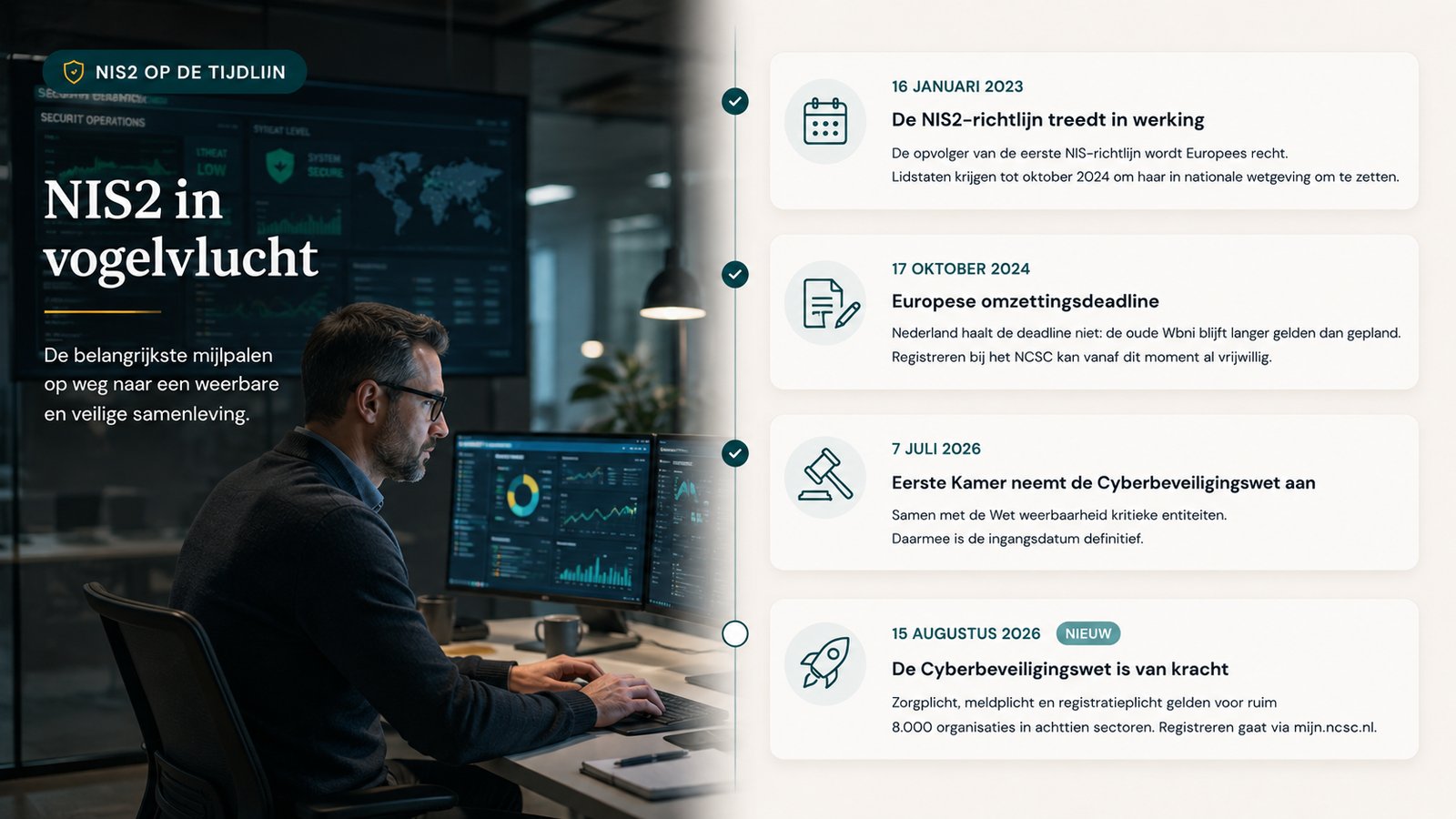
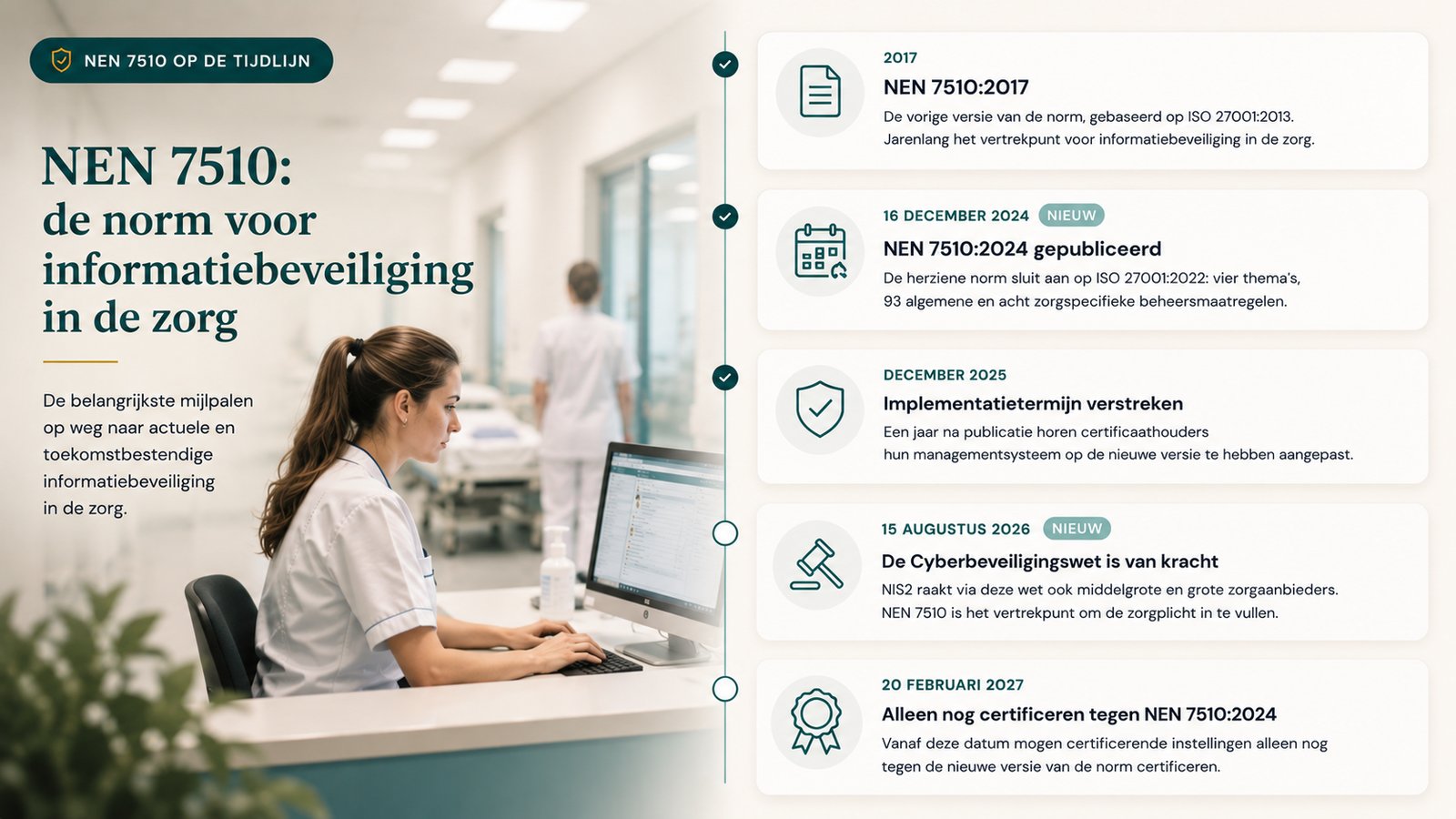
The BIO (Baseline Informatiebeveiliging Overheid) is the shared information security baseline for Dutch central government, municipalities, provinces, and water authorities. NEN 7510 is the Dutch standard for information security in healthcare, complemented by NEN 7512 and NEN 7513 for trust in electronic communication and logging of access to patient records. Both are based on ISO 27001 and translate it to their sector.
The common thread: sensitive data must be carefully classified, protected, and processed only by those allowed to, in an environment suited for it.
Citizen and patient data is often special-category personal data, such as health data, with extra protection under the GDPR. The AI risk is familiar: a staff member wants to help quickly and pastes too much context into a chatbot. The Dutch data protection authority described a case at a municipality where, in a one-month sample, CVs, care files, and internal reports turned out to have been put into a chatbot. That is exactly the scenario the BIO and NEN 7510 aim to prevent.
The problem is rarely bad intent. It is a useful question with too much traceable data, in a tool that was not approved for that purpose.
Classification. Citizen and patient data belongs in the highest sensitivity class. That settles it: such data may not enter a public or personal AI tool.
Acceptable use. The AI policy must make explicit what is not allowed: no patient, case, or citizen data in unapproved tools. See enforcing an AI policy.
The reflex in sensitive sectors is to ban AI. But a ban moves the use to personal phones and accounts, where there is no visibility at all. That creates shadow AI, precisely in the environment where the data is most sensitive. The more durable route is to enable safe use and make the risk visible at the moment it arises.
That visibility is exactly what a ban gives up. Rather than guessing which chatbots and AI note-takers have quietly become part of daily work on a ward or in a case team, an administrator can see every tool that has actually been opened, each one scored for risk, with nothing pre-approved or pre-blocked by default.
Search tool, vendor or category…
700+ tools
ChatGPT🇺🇸
HighAllowed
Claude🇺🇸
MediumAllowed
DeepSeek🇨🇳new
CriticalNot allowed
Perplexity🇺🇸new
MediumNo decision yet
Mistral🇫🇷
LowNo decision yet
Midjourney🇺🇸
MediumNo decision yet
Every tool, scored for risk
700+ AI tools, each scored Low to Critical, with nothing pre-approved or pre-blocked until someone decides.
BeeSensible highlights sensitive data while someone types in browser-based AI tools, so it can be removed, replaced, or masked before the prompt is sent. For government and healthcare, that is a concrete way to apply classification, awareness, and data leakage prevention at the moment it counts.
An example from healthcare: a staff member wants to rewrite a referral letter and pastes a passage with a name, date of birth, and diagnosis. The sensitive data gets a highlight. The staff member replaces it with placeholders, has the letter improved, and the patient data does not leave the organisation. An example in government: a national ID and a case number in a draft are highlighted and removed before the text goes to an AI tool.
Here is that same moment, live, as the text is entered:
Outlook
New message
Todr.smith@clinic.co.uk
SubjectClient file: Client
BeeSensible highlights sensitive details before send.
Hover or tap a highlighted value to replace, mask, or delete it - before the draft reaches anyone.
The highlight - and the choice to remove or replace it - happens before the send button, not after.
Not everything sensitive travels as typed text, though. A patient file, a referral letter already drafted elsewhere, a case dossier: these often move as a PDF attachment, opened on a desktop before being forwarded or pasted into something else. For that path, a tool that opens the document itself, marks the fields that are sensitive, and lets someone export a clean copy closes the gap a browser-only check cannot reach.
PreviewAnonymise (4)
The desktop app marks sensitive fields in a document for you to redact before you share it or paste it into AI.
That check runs on the device, or on EU infrastructure, exactly as classification and data minimisation demand for this kind of data.
An administrator sees, at an aggregate level, where the risks sit, without reading the content of personal chats. That supports the demonstrability the BIO and NEN 7510 ask for.
The infrastructure BeeSensible runs on is ISO 27001 certified; BeeSensible itself is not. BeeSensible does not replace your BIO or NEN 7510 work, but it makes the most important measure workable in a sector where the data gets no second chance.
What is the difference between the BIO and NEN 7510?
The BIO is the information security baseline for Dutch government, NEN 7510 is the standard for information security in healthcare. Both are based on ISO 27001. The BIO targets government organisations, NEN 7510 specifically organisations that work with patient data.
Can healthcare staff put patient data into an AI tool?
Generally not in a public or personal AI tool. Patient data is special-category personal data with extra protection under the GDPR, and NEN 7510 demands strict control. Processing may only be appropriate in an approved, managed environment with the right agreements.
Do the BIO and NEN 7510 apply to AI?
They do not name AI separately, but they apply as soon as sensitive data is processed in an AI tool. AI tools fall under the controls for classification, supplier management, awareness, and data leakage prevention.
Is a DPIA required for AI in government and healthcare?
For processing special-category data and for high risk, a DPIA is often required. In the public sector and healthcare, that is regularly the case for sensitive AI use.
What is the most important measure for these sectors?
Preventing citizen or patient data from entering an AI prompt at all. Data minimisation and awareness at the point of use are more effective than monitoring after the fact.
 Outlook