
On-device or cloud: what the difference actually buys you
Processing on the device sounds like the answer to every privacy question. It is a real difference with a real trade-off, and not every task fits inside it.
Read the articleWhere company data slips into AI tools, and how to see it before it leaves.
AI data leakage happens when someone pastes customer records, contracts, or credentials into AI tools that may store or expose them. European regulators increasingly treat this as a reportable data breach, and the practical fix is to catch sensitive data in the text field before it's sent, not to ban AI.
Most AI data leaks don't start with a breach. They start with a paste. Someone drops a customer email, a contract clause, or a spreadsheet into ChatGPT to save twenty minutes, and that data now sits in a system no one reviewed.
This is no longer hypothetical. The Dutch data protection authority (Autoriteit Persoonsgegevens) reports a rising number of data-breach notifications caused by staff using public AI chatbots, often free accounts, on their own initiative. In one case at a Dutch municipality, a single month's sample turned up CVs, care files, and internal reports uploaded to a chatbot.
The exposure depends less on the tool than on the account and the context. A personal ChatGPT login, a free tier woven into a workspace, or a prompt that happens to include a customer's bank details all carry different risk. These guides break down where each AI assistant sends your data, what it keeps, and which settings actually change the outcome.
Blocking the tools rarely works, because people move to their phones. The more durable approach is to make sensitive data visible in the text field, so the person typing can remove, replace, or mask it before they send.
Articles in this topic
Processing on the device sounds like the answer to every privacy question. It is a real difference with a real trade-off, and not every task fits inside it.
Read the article
A model cannot separate your instruction from text it encounters along the way. Once it can also act, that stops being a curiosity and becomes a governance question.
Read the article Integrations between AI tools and your own systems now take a few clicks, often from the employee's own laptop. Here is what actually happens.
Read the article
An agent acts on your behalf, so it acts with your permissions. Why least privilege is harder for agents than for people, and what holds up instead.
Read the article The difference between a chatbot that answers and an agent that acts. Once a model can do something rather than say something, the question changes.
Read the article An extension with read access to every site sees more than most AI services do. We are one ourselves, so this article is about us as well.
Read the article
Memory became a setting, and settings have owners. Sometimes you, sometimes your administrator, sometimes the vendor deciding for both of you.
Read the article
Advice on safe AI use is almost always about what you type. But a full case file, contract, or report uploaded wholesale skips that advice entirely. Here is what to do about the document, not just the prompt.
Read the article
The biggest privacy variable in AI tools is not which tool your team picks. It is which account tier sits underneath it. A free login and an enterprise licence process the same prompt under very different terms.
Read the article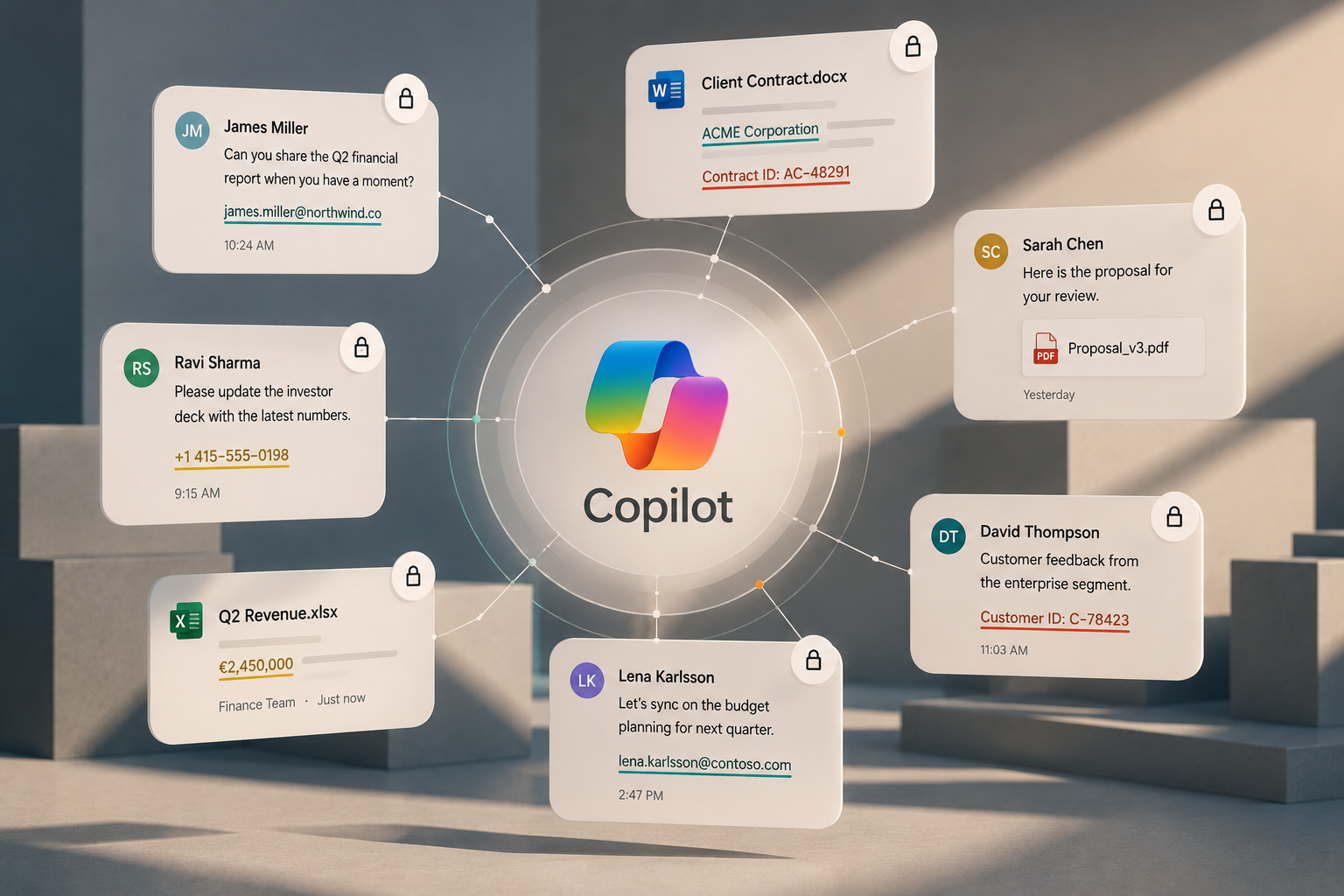
Copilot does not break permissions - it respects them perfectly. That is the problem. It makes every overshared folder, every stale 'anyone with the link', and every forgotten access right instantly findable by asking a question in plain English.
Read the article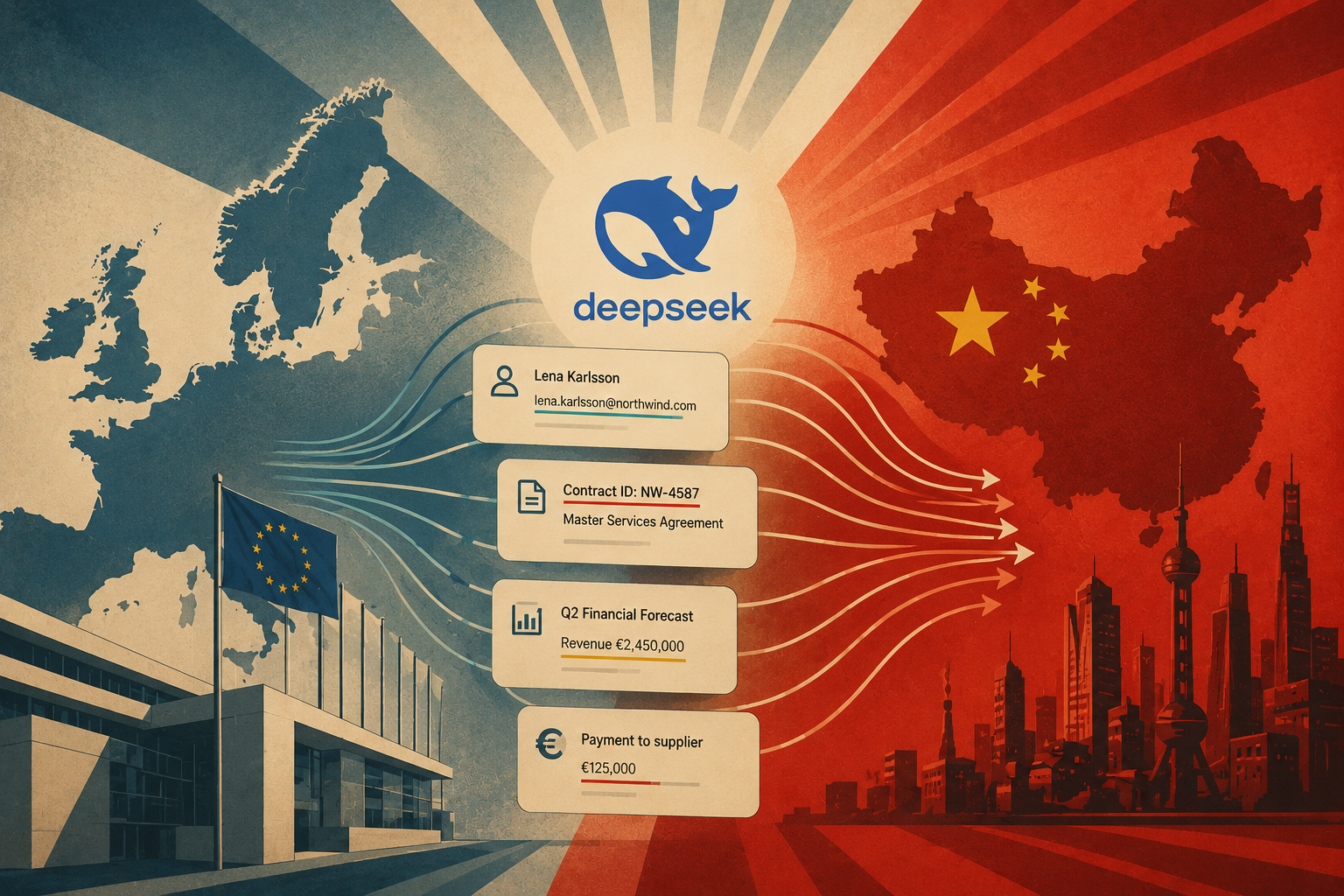
DeepSeek's model is impressive and openly licensed. But the app most people use sends every prompt to servers in China, under a legal regime with no EU adequacy. The privacy question is not how good the AI is - it's where your data sleeps, and who can ask for it.
Read the article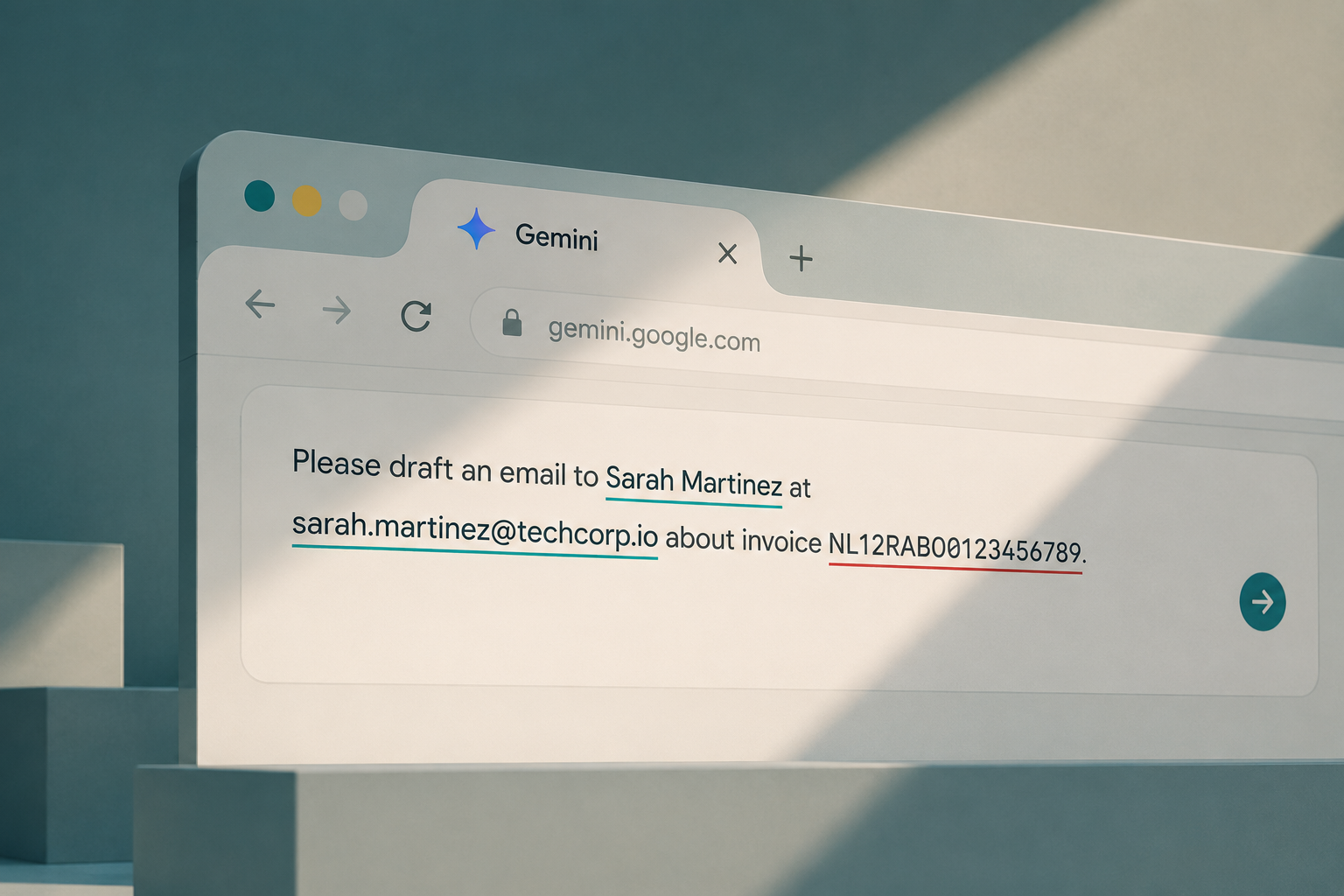
Gemini is not a website you visit - it's woven into Gmail, Docs, Drive, and your Android phone. The privacy question isn't only what an employee pastes into a prompt. It's which Gemini they are using, what it can already see, and what it's allowed to act on.
Read the article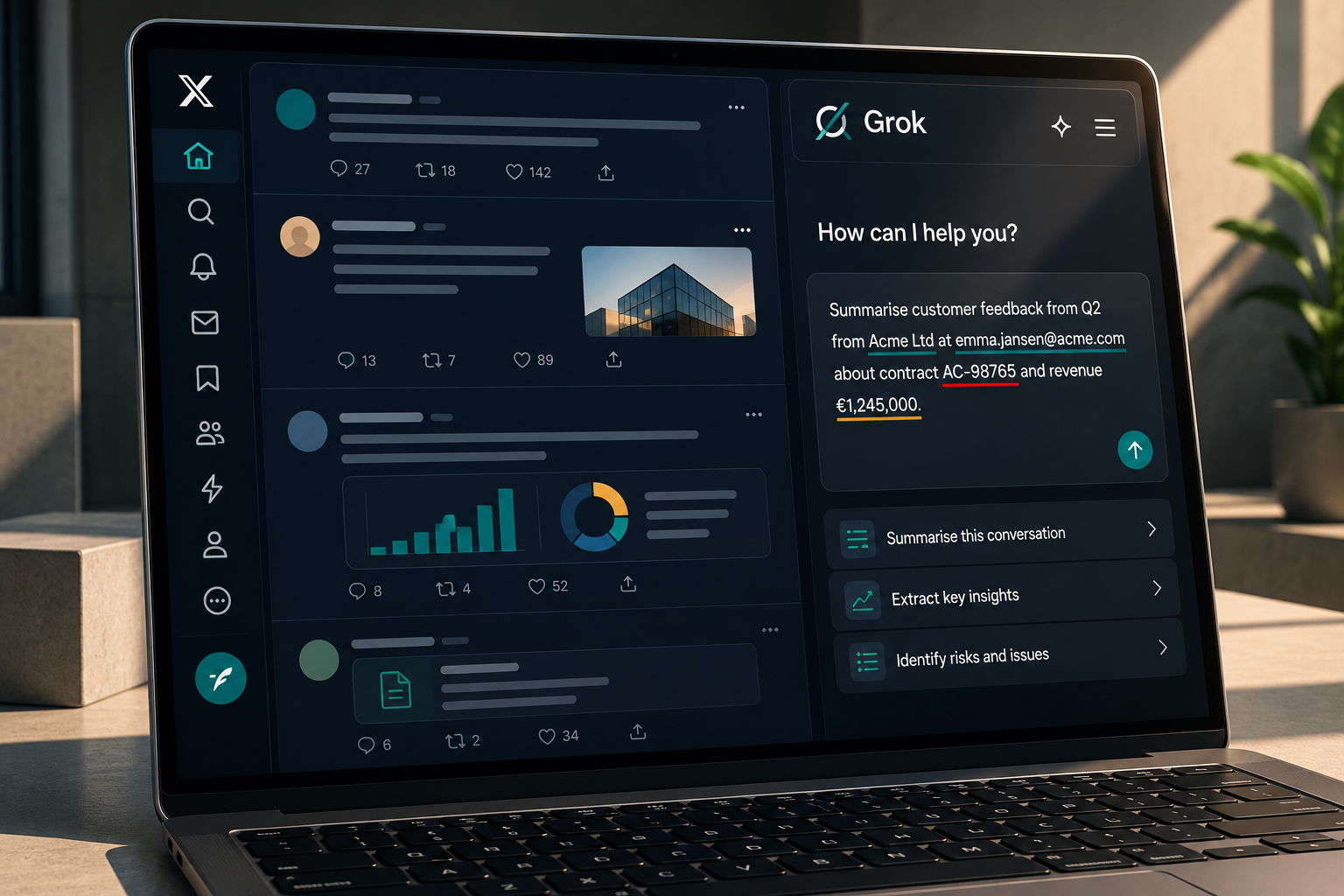
Grok lives inside X, a platform built for publishing - and in 2025 its share button quietly turned hundreds of thousands of private conversations into Google-indexed web pages. When the AI sits inside a social network, 'share' and 'publish' blur, and so does the line between a work tool and a personal account.
Read the article
Meta AI is not a separate tool you choose to open. It is built into WhatsApp, Instagram, Messenger and Facebook - the apps people use personally and, in many small businesses, for work too. It appears where the line between private and professional is already blurry, and it is a consumer product with no business protections.
Read the article
Mistral's Le Chat is the GDPR-friendly choice: a French company, EU data residency, no US CLOUD Act exposure by structure. All of that is real and genuinely valuable. None of it changes what an employee chooses to type into the box.
Read the article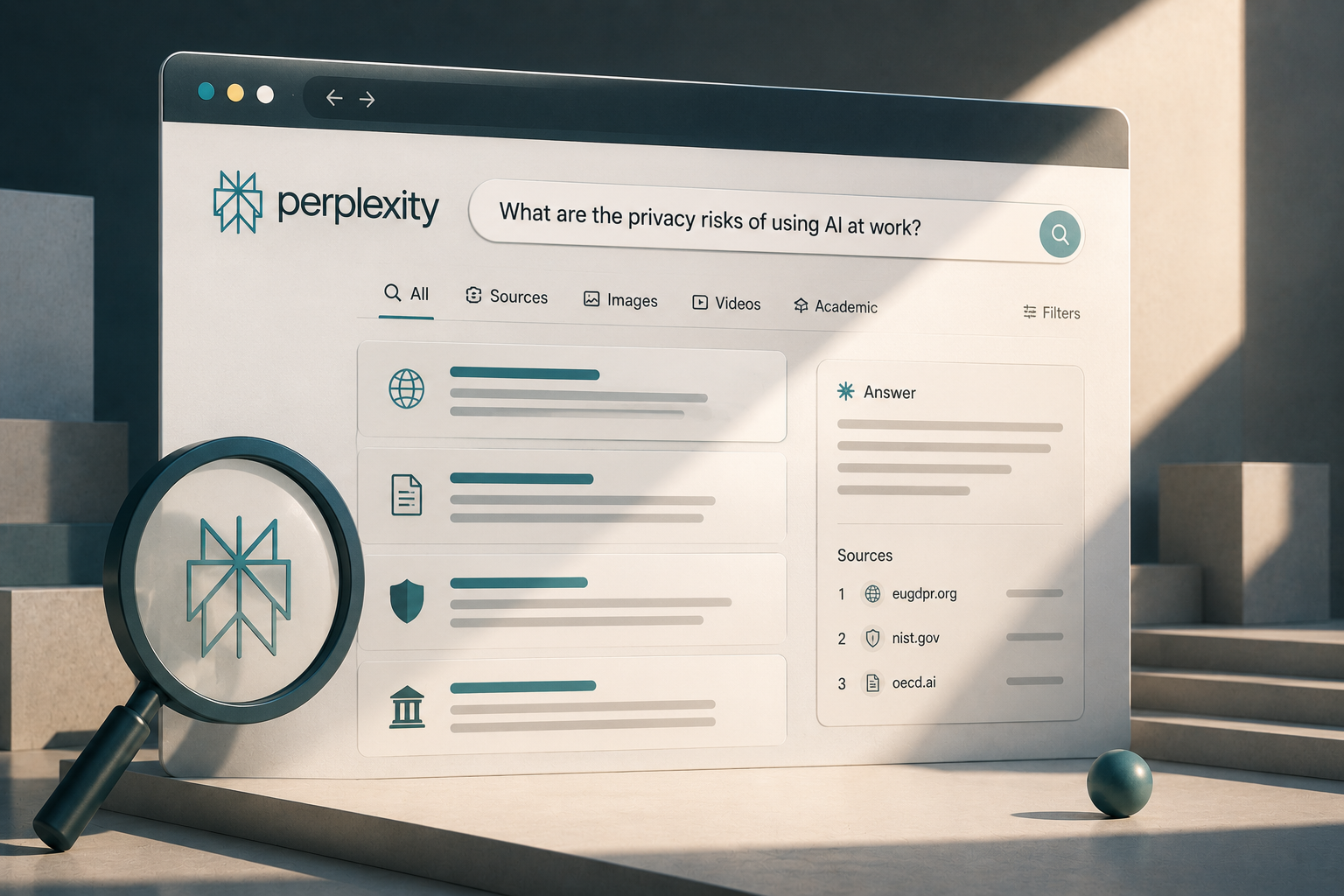
Perplexity looks and behaves like a smarter Google, so employees treat it like one: typing in client names, internal context, and confidential questions as if it were a private search box. It isn't. It's an AI service that retains data by default - and whose crawlers have been caught ignoring the rules.
Read the article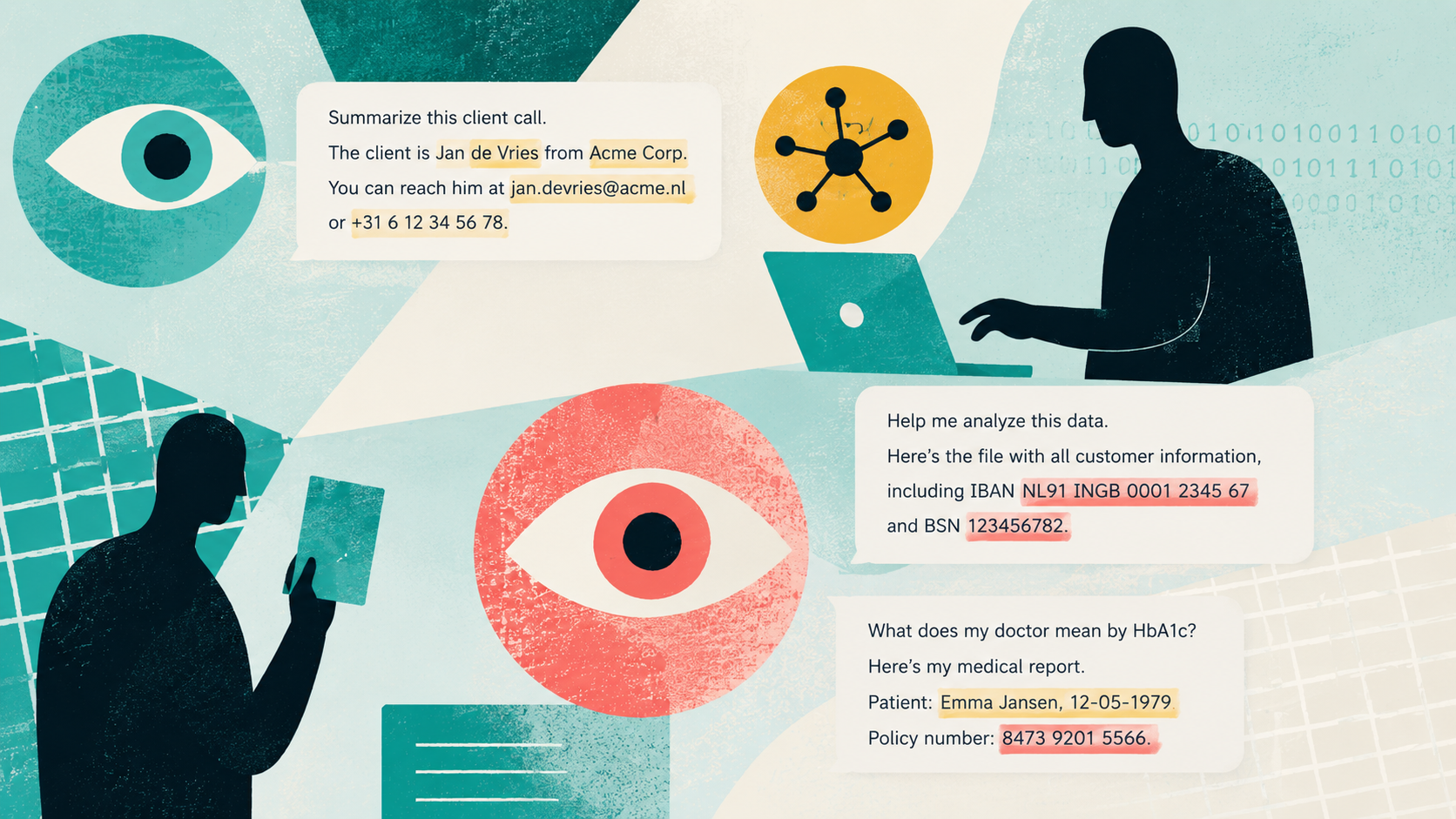
Claude can be a useful work tool, but account type determines whether Anthropic trains on your conversations. The gap that settings cannot close is the sensitive context employees paste before pressing Enter.
Read the article
AI tools now remember things between conversations. Useful for preferences, risky for work: a client name or case detail you typed once can resurface in an unrelated chat weeks later. Here is how to view, manage, and delete memory in each tool.
Read the article Over-broad permissions were harmless for years because nobody could find anything. An assistant that searches well changes that in a single query.
Read the article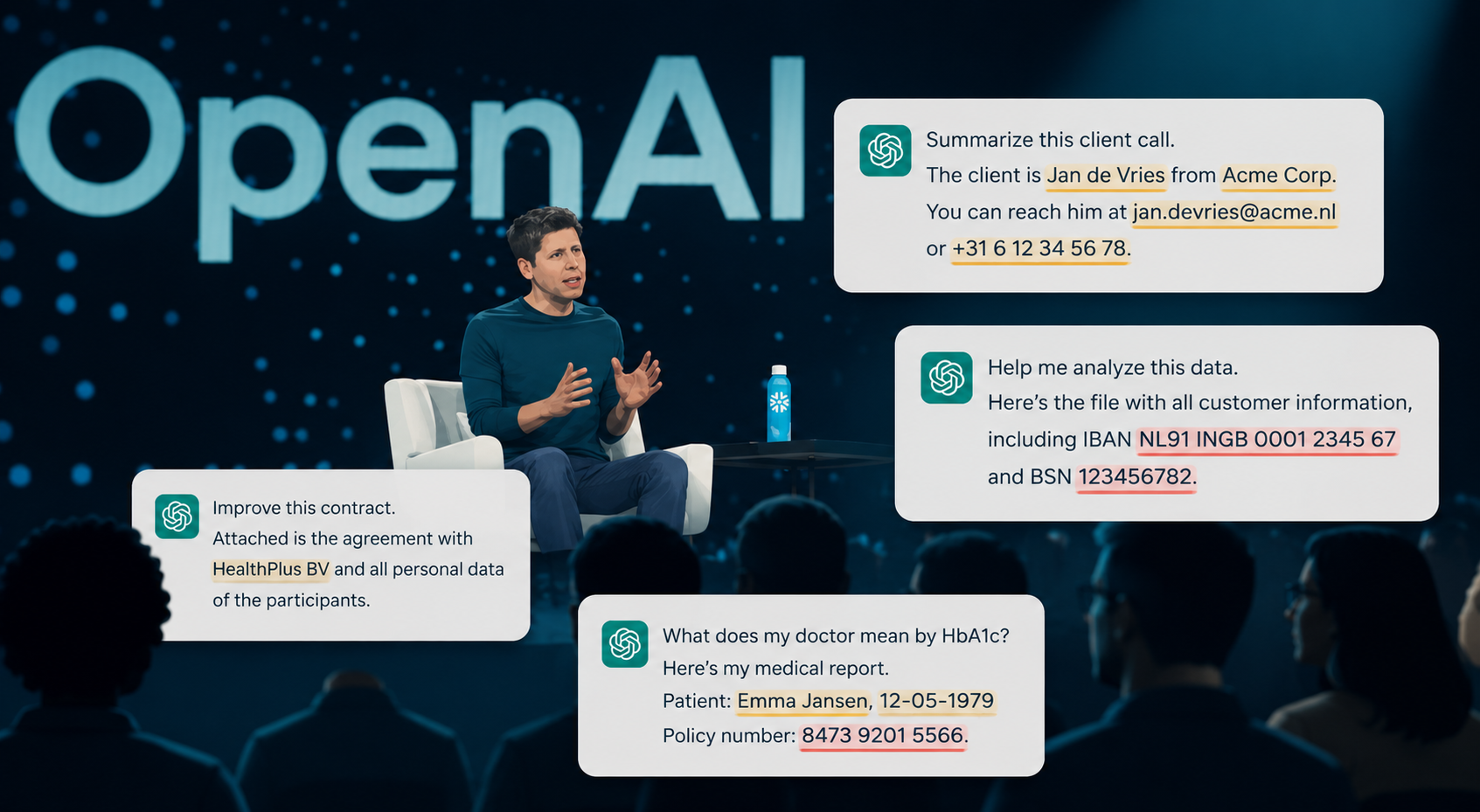
ChatGPT can be used safely at work, but the dangerous moment is often the first paste: customer records, HR notes, contracts, screenshots, and files copied into the wrong workspace.
Read the article You do not have to share anything to share something. Once an assistant is connected to your account it works with your permissions, and those reach further than you remember.
Read the article Once an AI tool can search your own documents, the question moves from "what am I pasting in" to "what can it reach". That is a different kind of risk, owned by different people.
Read the article Hallucination is not a fault in the system, it is a property of how the system works. And once the invention concerns a real person, it becomes a GDPR question.
Read the article Between the first keystroke and the send button, your text exists in more places than the interface suggests. Drafts, sync, extensions, keyboards.
Read the article Step by step, from the moment you drop the file to the moment a summary appears. And why "I only asked it to summarise" describes your request, not your transmission.
Read the article Encryption protects text from being read in transit. The recipient has to read it, or it cannot answer. That is not a gap in the design, it is the design.
Read the article Concrete examples of risky prompts and safer alternatives for support, finance, legal, HR, healthcare, and product teams.
Read the article Where your conversations live, who can reach them, what deletion does in the database, and what sits in the backup. Four layers, each with its own clock.
Read the article A practical guide to reducing AI data leakage with policy, prompt hygiene, browser warnings, and evidence-backed rollout steps.
Read the article
A long conversation loses its beginning. That does not mean the data is gone. The difference between what the model forgets and what the service retains.
Read the article
The promise covers training. It does not cover storage, human review, logging, or retention. What happens to text that is not used for training.
Read the article A practical checklist of data you should never put in an AI tool, what is usually fine, and the rule of thumb that helps you decide in borderline cases. It applies beyond chatbots, to meeting AI, email assistants, and transcription too.
Read the article
Whether an AI tool uses your conversations for training depends on the account and the settings. How to turn off training, how to request deletion, and why that does not fix everything.
Read the article
Your board wants a yes or a no. The honest answer is that this is four questions wearing one coat, and three of them were settled before anyone started typing.
Read the articleAny time sensitive information, such as customer data, financial details, health records, or credentials, is entered into an AI tool that may store or process it outside your control. Under the GDPR, that can qualify as a personal data breach.
It depends on the account and the settings. Business, Enterprise, and Edu plans exclude your data from training by default; personal and free accounts often do not. The larger risk is what people paste before anyone checks.
Combine a clear policy, the right account tier, and a signal in the text field itself, so the person can act on sensitive data before it's sent. Awareness at the moment of typing tends to hold up better than a yearly training.
Detect sensitive data before it leaves your team, in any app, in real time.